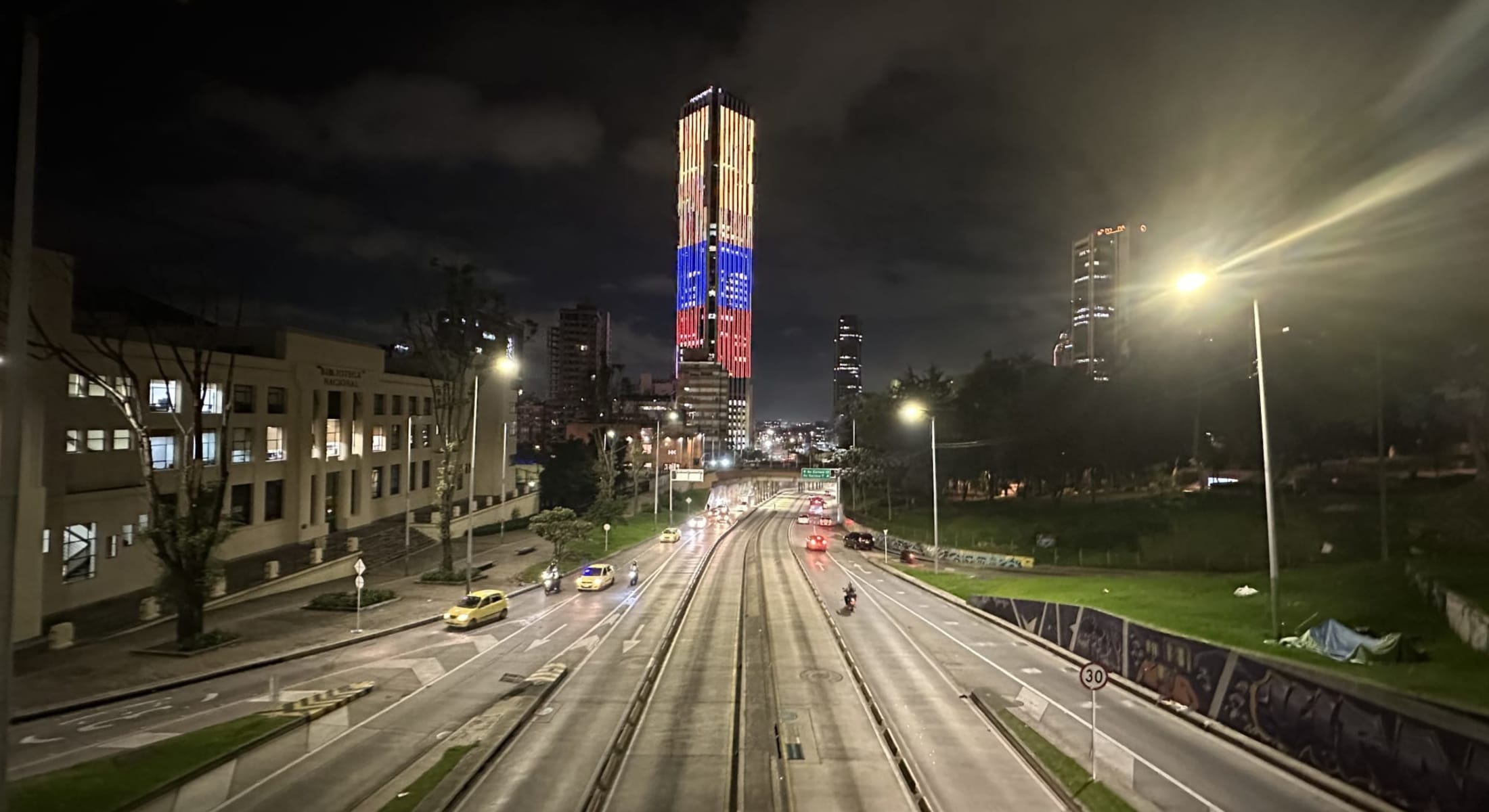
Bogotá sits at 2,640 meters above sea level — high enough to be felt, low enough to forget after a while. The city stretches across a vast Andean plateau, framed by mountains that form a natural wall around the basin.
Arrival is not dramatic — it is gradual. The air feels slightly thinner. Walking uphill takes a little more effort. Movements slow down almost imperceptibly. Bogotá introduces itself physically before it reveals itself visually.
At ground level, the city is dense and layered. Colonial façades stand beside modern glass towers. Political institutions coexist with street art. Financial districts transition abruptly into historic quarters. Nothing is blended — everything is stacked.
Over several days, we moved through different layers of the capital: the historic center of La Candelaria, the elevated views from Monserrate, the modern northern districts, cultural institutions and surrounding natural escapes. What emerged was not a single narrative, but a city defined by contrast, elevation and momentum.

Bogotá Graffiti Scene
The graffiti in Bogotá doesn’t feel random — it feels intentional. You see large murals, small tags, political statements, abstract shapes, and detailed artwork all existing next to each other. Some walls look freshly painted, others are layered over years, creating a mix of stories on top of each other. What stands out is how normal it feels. It’s not separated into one “art district” — it’s everywhere. Between houses, along streets, on corners you wouldn’t expect. There’s a rawness to it. Not everything is polished, not everything is meant to be beautiful. Some pieces feel loud, others almost quiet. Walking through these areas feels less like visiting something curated and more like witnessing a city expressing itself in real time.

Monserrate
Getting up to Monserrate feels almost too easy. The cable car lifts you quickly above the city, and within minutes, Bogotá turns into a wide, endless landscape beneath you. The scale becomes obvious — a city that stretches far beyond what you can take in at street level. At the top, the air changes. It’s thinner, cooler, and you feel the altitude immediately. Movements slow down, breathing becomes more noticeable. The view is the main reason people come here — and it delivers. Layers of buildings, mountains in the distance, clouds moving quickly across the sky. But what makes it memorable isn’t just the view. It’s the contrast. The distance from the noise, the sudden calm, and the feeling of being slightly removed from everything below. For a moment, Bogotá feels quiet.

Zona T & Chapinero
After spending time in older parts of Bogotá, this area feels almost unfamiliar. The architecture shifts — glass, concrete, clean lines. Streets are wider, movement feels more organized, and the overall atmosphere changes. There’s a different rhythm here. Cafés, restaurants, and rooftop spaces create a more international feeling. In certain moments, it doesn’t even feel like South America anymore. At the same time, it’s not disconnected. It’s still Bogotá — just a more developed, more polished layer of it. That contrast is what makes it interesting. Within a short distance, the city shifts completely — from historic and raw to modern and structured.

La Candelaria
Walking through La Candelaria feels less like sightseeing and more like stepping into a living piece of the city’s past. The architecture stands out first — low colonial houses, painted facades, wooden balconies. But what really defines the area is the contrast. Right next to historic buildings, you’ll find bold graffiti, small cafés, and local street scenes that don’t feel staged. It’s not a perfect postcard location. Some corners feel rough, others surprisingly calm. That mix is exactly what makes it interesting. You notice the textures — cracked walls, bright colors, old doors, shadows in narrow streets. It’s the kind of place where you don’t need a plan. Just walking around already tells you enough about the city. For us, La Candelaria wasn’t about ticking off sights. It was more about absorbing the atmosphere — slow, unfiltered, and very real.

Museo del Oro
The Museo del Oro isn’t about gold in the modern sense. It’s not about wealth or value — it’s about meaning. Inside, thousands of small objects tell stories of civilizations that existed long before Colombia became a country. Each piece feels precise, almost delicate, yet carries a deeper symbolic purpose. What stands out is how different the perspective is. Gold wasn’t used to display power in the way we think today. It was connected to rituals, beliefs, and identity. Walking through the museum feels quiet and focused. No chaos, no noise — just objects, space, and time. It’s one of those places that slows everything down.
Travel Setup for Bogotá
Staying connected and secure while traveling makes a real difference — especially in destinations where public networks are common and mobile coverage varies.
-
Mobile Data — Use an eSIM to avoid roaming costs and stay connected from the moment you arrive. Explore the full eSIM Guide
-
Digital Security — Public WiFi can be unreliable — a VPN protects your data and ensures access to essential services. Compare VPN providers

